Passing Through Liner Notes

With Passing Through, country music icon Randy Travis keeps his artistic legacy moving forward. No other Randy Travis album cuts this deep and wide -- and that, given the struggles of his past and the odds he has beaten, makes Passing Through about as strong as any album can be.

The 16th studio album of his career, Passing Through is a 12-track compilation of outstanding songs that touch the heart, provoke the mind and keep toes tapping. From "That Was Us," a recollection of early years filled with reckless adventure, to "My Daddy Never Was," which captures a man, broken by his transgressions, at a moment of decision, the songs on Passing Through offer insight into this artist, with honesty and eloquence.

With 22 number one hits, four Grammys, five CMA, nine ACM, 10 AMA, five Dove awards, and a star on the Hollywood Walk of Fame, Travis has achieved more than might have been expected from a kid who once seemed doomed to self-destruction. But the hard times as well as the better days that followed now nourish a style that's rooted in the lessons of life. Like George Jones, Hank Williams, and the other giants who inspired him to start singing when he was just eight years old, Travis has sung about faith and betrayal, love found and lost, honky-tonk Saturday nights and sunlit Sunday mornings, all of it with a conviction born from experience.

"Passing Through does hit on a lot of different subject matters, there's no doubt about that," Travis admits, with typical understatement. "From your faith to the things that challenge you to relationships between man and wife, it's about what people go through each day."

Coming on the heels of Rise and Shine, the critically celebrated gospel CD whose single, "Three Wooden Crosses," topped several charts and earned both a Grammy and CMA's song of the year award, Passing Through represents a determination by Travis and his partners at Word Records/Curb/Warner Bros. to challenge expectations -- the industry's as well as their own. "'Three Wooden Crosses' was the first time that Word had gone to country radio and gotten air play," Travis explains. "So it made sense that Passing Through would be another first for Word -- to put out an album that's pure country from beginning to end. They showed a lot of trust and stuck with me from beginning to end. I couldn't have asked for more support; they have been just wonderful."

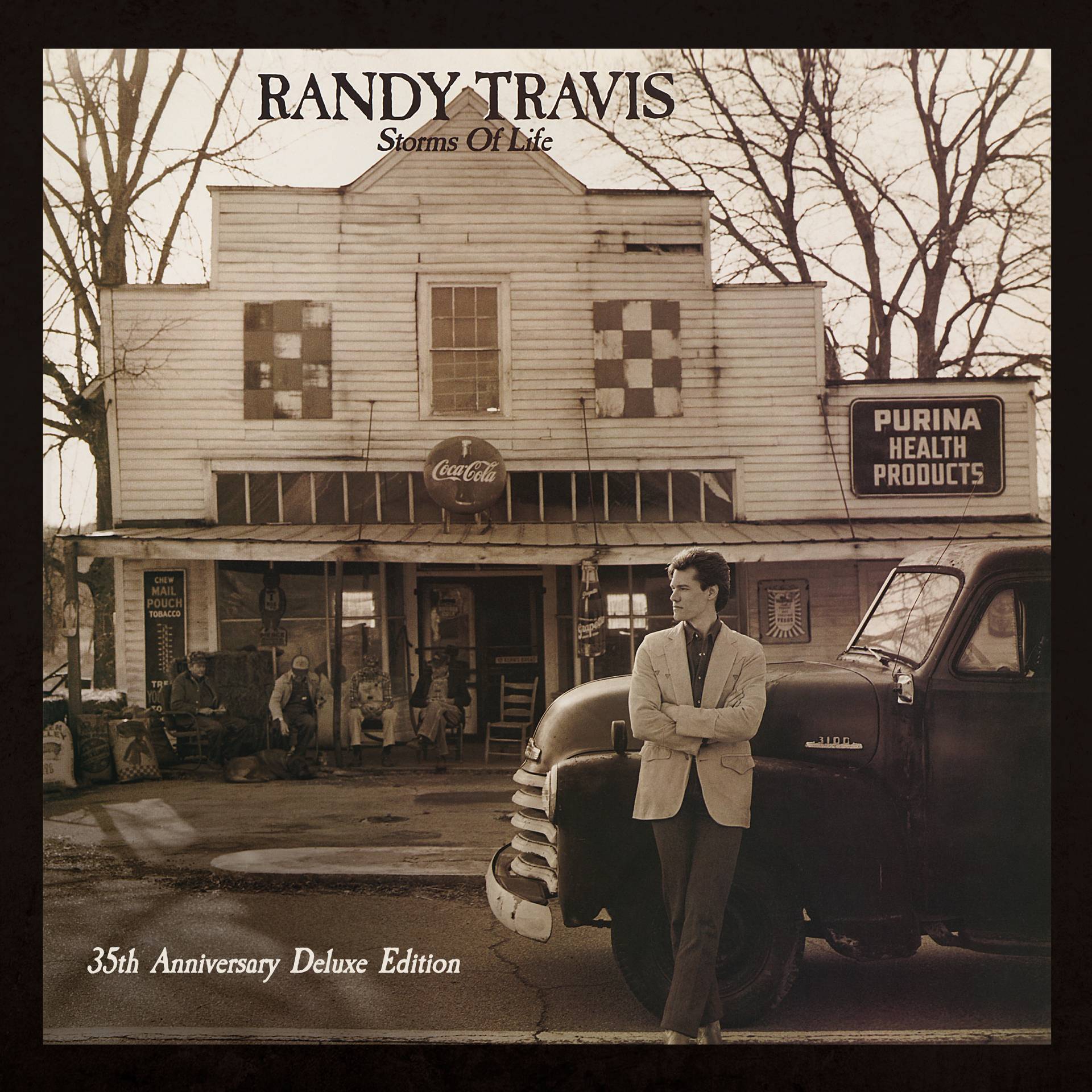
The heart of Passing Through, though, lay in the hands of a team that has stood together during all the years of his ascendance: Travis, his wife Elizabeth Travis, whom he credits for guiding his career as well as helping him find salvation, and Kyle Lehning, who produced almost all of his albums going back to Storms of Life, a four-million seller since its release in '86. Through time their ties have strengthened, so that Passing Through testifies to three peoples' beliefs as much as to one man's gifts.

"We're family," is how Travis puts it. "Kyle and I both know what kinds of songs will work for me, as far as the melody, the range, the feel, and the production. When you work together for a while, one of two things can happen: Either you get stale, which in my opinion comes from losing interest in what you're doing, or you get to know each other extremely well. That's the case with in our relationship."

Their commitment to Passing Through began with their resolution to settle for nothing short of the best material they could find. This translated into an exhausting search for songs and a filtering out of everything that fell short of their standard -- even, Travis says, if he had written it himself. "Kyle has no trouble telling me if he thinks one of my songs is no good," he laughs. "But that's the only way you can do it. And that's the kind of relationship we have."

In the end they listened to more than a thousand new songs in the early stages of Passing Through. "The funny thing is, I really like that part of the process," Travis says. "I love finding songs, going through them, tearing them apart, and seeing if I can find anything wrong with them. That would irritate some people, but I know I'll always find something; it just takes patience and a lot of looking."

The search eventually led to a dozen tunes, two of them written or co-written by Travis, the rest from a mix of writers he knew and some he didnÕt. It didn't matter who created them; each song had to connect with the singer. And in some instances, the connection was uncanny.

Echoes from long ago crop up on "That Was Us," when as a teenager growing up outside of Charlotte, North Carolina, Travis dropped out of school and fell into a routine of drugs, drinking, and violence that made it a matter of speculation whether he would even live to see his 18th birthday. "From the first word, I guarantee you, 'That Was Us' is autobiographical," he says. "Just like the kids in this song I was doing crazy things, like wrecking my brother's 396 Chevelle after crashing it into the police chief's car at 145 miles an hour on a country road. The first policeman there was hot, boy. He didn't even open the door; he just reached in, grabbed me by the throat, and pulled me out through the window."

But "That Was Us" isn't just a teenage romp. Like "My Daddy Never Was," it mixes the promise of light into darkness, which is one reason why Travis sees himself in its lyric. On other songs the light prevails, as it has for Travis since he started straightening himself out; he was seventeen at the time, in Charlotte, where one night he won a talent contest in a bar owned by the woman who would become his manager and, later, his wife. Their journey, professional and spiritual, would take them to Nashville, where Elizabeth ran the famous Nashville Palace venue and Randy alternated between washing dishes in the kitchen and singing on stage. By 1987 he had won his first CMA awards, for male vocalist of the year, song of the year for "Forever and Ever, Amen," and album of the year for Always and Forever. More important, he had scattered the shadows from his life and reached a point where meaning could be found through music.

And so we have songs of love: starting with one for grandparents long gone but reflected in the present day in "Four Walls;" for mothers throughout the world in "Angels," for life long partners sought and finally found on two Travis compositions, "I Can See It In Your Eyes" and "I'm Your Man." Passing Through also points to miracles that can be too easily mistaken for everyday conversations ("Running Blind"), dishes out some wry advice on dealing with disappointment ("Pick Up the Oars and Row"), and addresses more enduring issues ("A Place to Hang My Hat," "Right On Time"). And, yes, there's some dancing too, in the honky-tonk groove and classic lament of "My Poor Old Heart" and the roll and rhythm of "Train Long Gone."

Each moment is a snapshot, a recollection, a feeling maybe forgotten and now remembered again. When each takes its place a picture assembles of an artist whose legacy is assured but whose work is only just underway. More than that, Passing Through is a mirror where all listeners, wherever they are on their path through the world, can see themselves, at a place mundane and at the same time magical, and worthy of a song.